Wednesday, October 22, 2008

Nabokov: "Quit Laughing at Don Quixote!"


Vladimir nabokov taught a series of lectures on Don Quixote as part of a humanities survey course that he was teaching at Harvard in 1952. The lectures on Don Quixote were meant to serve as an introduction to the rest of the course. This article from the New York Times about Nabokov's obsession with the literary hero explains well his belief that Don Quixote is taken too lightly, that we shouldn't laught so much at his misfortune's (I am VERY guilty of this!) It is not meant to be a heartwarming novel, but rather a heart wrenching one. I will explain this in more depth after i finish the lectures, but this article makes a good introduction!

Mad-man of La Mancha


Last november when i was studying in spain, we made a trip to barcelona which coincided perfectly with an exhibit in the cultural museum there of the spanish artist Salvador Dali's private collection of paintings. There was one room of the exhibit that was completely devoted to Dali's interpretations and art paying homage to the literary hero Don Quijote. The paintings were beautiful, and they mean more to me now after having read don quixote. i wanted to share a few here:


"The road of excess leads to the palace of wisdom"


We cited this quote from William Blake in class today. When I went looking for it online I found a quote of his that I thought summed up the anagogic mindset even better:


“The man who never in his mind and thoughts travel'd to heaven is no artist.” (Blake)


That sounds like exactly what we're getting at with this religious, woo-woo, idea of art and poetry in the anagogic phase. But anyways, back to Blake, he's my critic but I hadn't done any research on him yet, only a list of questions about his criticism that I had intentions of researching and getting the answers to eventually. But, today was the last straw. Every single time we mention Blakes name, it is followed by excess or exhuberance and I can't stand it any more! I need to know what the connection is here between Blake and excess, exhuberance, what does this mean! For starters, dicitonary and thesaurus: exhuberance, because truth be told, i'm not sure i exactly know what that word indicates in it's most literal form, so before applying it to Blake's mentality, dictionary definition:


Of all the synonyms, the one i grasped best was "enthusiasm", which we etymologically traced to mean "in theos" , "in god" as in overtook by the spirit of god, which makes since in this context, the exhuberance of art, the religious aspect of art.


exhuberant: joyously unrestrained or enthusiastic


sounds like rhapsody to me. I imagine the behavior of an exhuberant person as sparking a lot of sideways glances and "woo-woo" critiques. Which leads me to some Blake artwork I found (apparently he was as famous a painter and engraver as he was a poet!)


The abundance of William Blake paintings out there really surprised me, first because i've always heard of William Blake in the context of poetry and had no idea he was a painter/engraver as well and second because these painting are OUT THERE, exhuberant, OVER-THE-TOP, wooo wooooooooo............

((More on Blake to come))

Hymn to Intellectual Beauty


Someone brought this up to class today, and I made a note to myself to look it up (special thanks to bartelby.com- a warehouse of essays and poetry for the romantics!) Here is yet another testimony to the anagogic mindset and the unseen powers that move us... the "IT" Heather was eluding to in her blog:


"It visits with inconstant glance

Each human heart and countenance"


We said in class today that anagogy is "almost a rememberance" A rememberance of what? This is an idea I hope to explore a little more in the coming discussions in class, but regardless it is echoed in this hymn by Shelley..


"I call the phantoms of a thousand hours

Each from his voiceless grave"


And lo and behold! A reference even to the "woo-woo" moment that accompanies these anagogic revalations....


"Of life, at that sweet time when winds are wooing

All vital things ..."


Haha I think i'm just kidding about that one. That's wooing singular, I think it is distinct from "woo-wooing"


As for my favorite line in this gorgeous hymn:


"O awful LOVELINESS,

Wouldst give whate’er these words cannot express."

Ode on a Grecian Urn


In reading the first few sentences of the first Keat's letter on the web site that Sexson sent out to us- that on the "Authenticity of Imagination"- I immediately recalled this very important poem of his that we looked at in classic literature while studying greek mythology: "Ode on a Grecian Urn"


Wow!

Re-reading this for the first time in almost 2 years- since Classical Lit Spring 07- I recall how much this poem moved me the first time I read it, oh! These lines in particular...


For ever warm and still to be enjoy'd,

For ever panting, and for ever young;

All breathing human passion far above,

That leaves a heart high-sorrowful and cloy'd,

A burning forehead, and a parching tongue.


There's Anagogical for you! As we reviewed in class today, Anagogy is a wording of the highest thoughts, the highest thing imagineable. In works of art, like this grecian urn, beauty is preserved for all time as it cannot be in reality, which is why Keats and the other anagogists defend that poetry and art are above reality, because while nature's beauty changes, conforms, and dies out, beauty and truth are preserved in art and therefore better and ever-lasting.


'Beauty is truth, truth beauty,—that is all

Ye know on earth, and all ye need to know.'

Saturday, October 11, 2008

Rhapsody to Rilke


I liked how we used that word in class on Friday, discussing how both Sidney and Shelley's Defenses are rhapsodic in nature. I was intrigued by that beautiful word so i made a note to myself to look it up when I got home. Rhapsodic (dictionary definition): extravagantly emotional. Is it just me or is the literal, dictionary definition sounding pretty poetic there? Extravagantly Emotional. That's how I like my literature! I don't like literature laid out as math: none of these "how does X function in the text" analytical inquiries. I just want to be moved by something extravagantly emotional. Like Sidney, Like Shelley, where the poet is the "great legislator of morality".


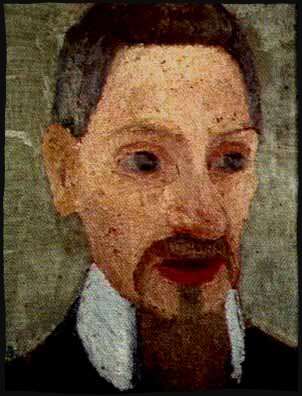
One of the great Rhap-ers i've encountered in my literature experience and who has impacted me the most has been the German poet Rainer Maria Rilke, whose prose piece "Letters to a Young Poet" I have returned to time and time again in times of loneliness and anxiety. As I am re-reading the letters right now, the mention of his work in our recent Northrop Frye reading assignment- the anagogic phase- was one of those classic instances of synchronization that seem fall on english majors at least 3 times as often as the average human being. Although, the "Letters" are the only literature by Rilke I have read (so far), it has offered me more comfort and been more valuable to me than anything else they've handed me in school. It is extravagance and exhuberance and emotion: it is poetry as religion, which is why Frye employs him as an example in the anagogic phase, where literature is thought to express the highest spiritual meaning. "Anagogic Criticism is usually found in direct connection to religion, and is to be discovered chiefly in the more uninhibited utterances of the poets themselves" (Frye 122). For Rilke art and poetry are the essence of life. I tried to see if I could figure out exactly which passage in the letters Frye refers to on that same page, 123, where he uses Rilke's idea of the poet "revealing a perspective of reality like that of an angel", and if it is taken out of "Letters to a Young Poet", I think it must be here in the sixth letter, where he advises the young poet to "think, dear sir, of the world you carry within you... be attentive to that which risses up in you and set it above everything" and then, the spiritual revelation of the poet:
"As the bees bring in the honey, so do we fetch the sweetest out of everything
and build Him. With the trivial, even with the insignificant (if it but happens
out of love) we make a start...with everything we do alone...we begin him"
(Rilke)
Effectively, the poet builds god, he and god are one. Anagogic may be the only one of the 5 symbolic phases i'm clear on, thanks to the Rilke allusion.

This will probably be the first of several blogs focusing on connections in Frye with Rilke.


If you haven't read it yet, go read it now, because I think no matter what point you're at in your life this book will spark lightbulbs and passions, or at the very least be helpful and comforting. I reccomend it to any and everyone!

Wednesday, October 8, 2008

Polemics, Apologetics

Frye preludes "Anatomy of Criticism" with a polemic introductions- having come across this term on more than one occasion in the study of lit crit, i had to wiki the definition, just to be clear on what we were referring to. http://en.wikipedia.org/wiki/Anatomy_of_Criticism (see "polemic introduction"). What makes Anatomy of Criticism polemic? Polemic is defined as "the practice of disputing religious, philosophical, or political matters"- in other words, the "touchy" subject, the ones which, as we said in class, you NEVER bring up. So a polemic text, than, like Anatomy of Criticism, seeks to dispute a theory that is seemingly indisputable. That's Frye for you, going above and beyond mere dispute.

Curiously enough (leave it to the genius of wikipedia- one thing leads to another, link after link of synchronization), the definition for polemic included it's antonym: Apologia. As in Apologetics. Apologists argue for, rather than against, those touchy theories. Apologia is Frye= polemics. Sidney/ Shelley= apologetics. Anyways, i thought it was quite interesting that Frye and Sidney are by definition, opposites, both in style and in school of thought, since that was the initial impression I got in reading and comparing their works.